
When Pricing Goes Wrong: The Seller's Cost, The Buyer's Opportunity

Last post I talked about pricing being the real litmus test in this market. Here's what it actually looks like when a seller gets that number wrong — and what it costs, whether you're the buyer or the investor on the other side of that mistake.
The retail buyer: knowing the market beats accepting the list price
Not every win looks like months of patience on an investor deal. Sometimes it's a buyer's agent who knows the comps cold and isn't willing to let a client pay a cent more than the market actually supports.
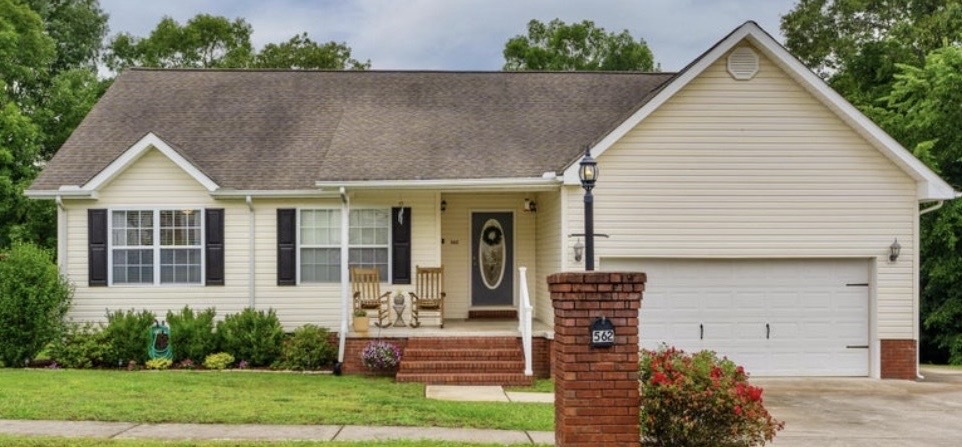
That's what happened with a creek-front, one-level home I worked recently in Ringgold. It was originally priced too high — open floor plan, screened porch overlooking the water, fenced backyard, genuinely a nice property, but priced past what the market was going to bear. It sat. Eventually the seller reduced the price. Most buyers would've looked at that reduced number and assumed it was already the "deal" price.
It wasn't. Even after the reduction, the number still had room in it — and because I knew what comparable homes on that creek had actually closed for, we didn't just take the new list price at face value either. We negotiated further off it and got my buyer more money off than the reduction alone would've suggested.
That's the retail side of "knowing the market" in action: not waiting on a seller to eventually get realistic, but being able to prove — with real comps — exactly how unrealistic a number still is, even after it's already come down once.
The investor: priced too high, patience pays
Then there's the other end — a multifamily property I worked recently that was priced too high for its condition and for what the current market would actually bear. It didn't show well either. Needed work, sat there looking like exactly the kind of listing most buyers scroll past.
Here's what most buyers don't factor in when they scroll past a property like that: everything it needs — the roof, the units that need to be brought up to rentable condition, the deferred maintenance — costs real money. Work requires capital, and capital has a cost. That math doesn't move. So when a seller's asking a price that doesn't leave room for the work the property actually needs, the deal doesn't work no matter who's looking at it. The price has to come down to where the numbers — purchase price plus rehab plus financing — actually pencil out. That's not a negotiating tactic. That's just the math.
My investors saw past that. We offered. Seller said no. We waited. We offered again. Said no again. We waited. We offered again — and got it exactly where it needed to be for the numbers to work.
What we ended up with is a deep value multifamily asset that'll cash flow significantly, even at rates well above what everyone got used to in 2021. That deal didn't get found sitting on a shelf. It got built, one patient offer at a time.
A word on "low" offers
A lot of agents don't like writing offers that come in well under asking. It feels uncomfortable, it can feel like an insult to the seller, and plenty of agents would rather write something closer to list just to avoid that conversation.
I don't have that problem. If the math says a property's worth X once you account for what it actually needs, then X is the offer — full stop. That's not a low offer. That's a true market offer, backed by real numbers, not a number picked to feel polite.
If you're working with someone who's afraid to run the hard math or have the hard conversation with a seller, that's costing you money. Book a call with me and let's talk about what an honest number actually looks like on a property you're considering.
Same market, one common thread
Here's the thing — both of these happened in the same market, in the same few weeks, and neither one is really about speed or luck. They're both about the same skill: knowing the actual market well enough not to accept a number just because it's the one on the sign.
For a retail buyer, that meant proving a "reduced" price still had room in it and getting more off. For an investor, that meant staying in on an overpriced property through multiple rounds of no until the price finally matched what the numbers required. Different timelines, different stakes — same refusal to pay for a number nobody had actually earned.
That's what "knowing the market" is actually for. Not a talking point on a listing sheet — leverage, every time it's used right.
Next up, I'll cover the other side of pricing: what it looks like when a seller gets it right from day one, and a home moves fast without any of this back-and-forth.
Whether you're looking for a home that's ready now or a deal worth waiting for, let's talk about which one fits what you're after. Reach out — 423-240-3396.
Jennifer Dixon, MBA, LPT Realty
Categories
Recent Posts






"My job is to find and attract mastery-based agents to the office, protect the culture, and make sure everyone is happy! "